| Budo |
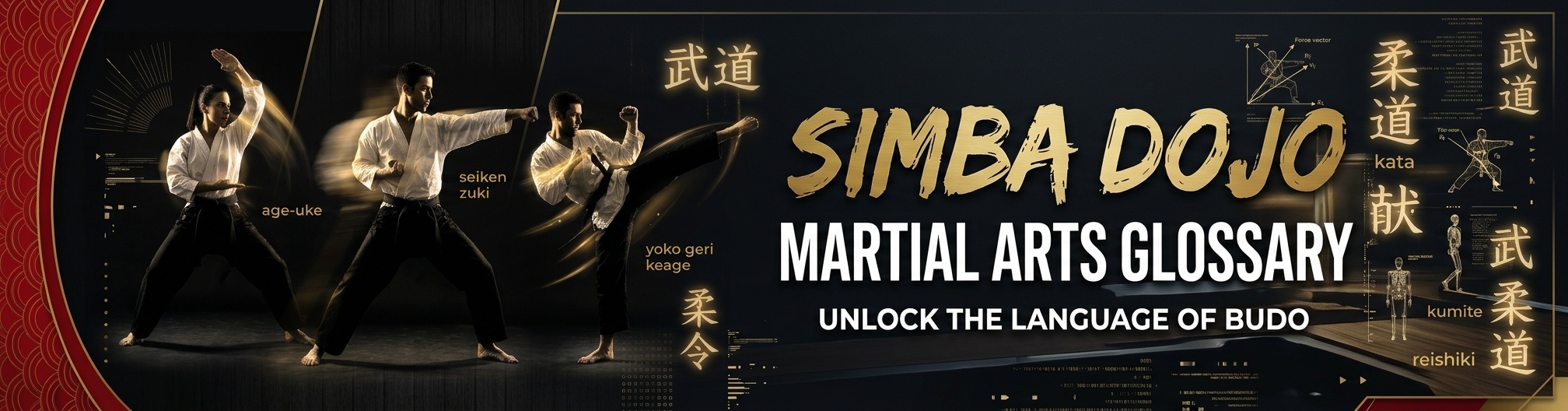
Budo is the overarching philosophy and cultural framework governing traditional Japanese martial arts, translating directly to "the [[3]]" or "the way of martial chivalry." Distinct from battlefield techniques focused purely on victory (Bujutsu), Budo represents a lifelong path of ethical discipline, spiritual refinement, and self-mastery. Through the rigorous physical forging (Shugyō) of body and mind, Budo transforms combat systems—such as Shotokan Karate, Judo, Kendo, and Aikido—into vehicles for self-cultivation, moral character, and lifelong personal development.
Etymology & Structural Breakdown
The term Budo is composed of two primary Japanese kanji characters rich in ideological meaning:
-
Bu (武): Meaning "martial," "military," or "warrior." Etymologically, the character Bu combines the radicals for "spear" (戈) and "stop" (止), reflecting the philosophical concept of stopping violence or wielding strength to preserve peace.
-
Dō / Michi (道): Meaning "way," "path," "road," or "philosophical journey," derived from the Chinese concept of Tao.
Combined, Budo (武道) translates literally to "the martial way" or "the path of stopping conflict," emphasizing spiritual and ethical growth over mere combative destruction.
Key Characteristics & Components
-
Shin-Gi-Tai (心技体): The core triad representing the harmonious unification of Mind/Spirit (Shin), Technical Skill (Gi), and Physical Body (Tai).
-
Reirō (礼路 / Etiquette & Respect): Budo begins and ends with courtesy (Rei). Reirō enforces absolute respect for instructors (Sensei), training partners, opponents, and the dojo environment.
-
Mindfulness and Mental States: Emphasizes advanced mental states including Zanshin (lingering awareness), Mushin (no-mind / spontaneous state), Fudōshin (immovable mind / composure), and Heijōshin (everyday mind / tranquility under pressure).
-
Self-Mastery Over External Conquest: The true goal of Budo is not conquering an adversary, but achieving victory over one's own ego, flaws, and weakness (Masakatsu Agatsu — "true victory is self-victory").
Practical and Tactical Application in Shotokan Karate
In Shotokan Karate, Budo serves as the underlying ethos that transforms raw punches, kicks, and blocks into a disciplined physical discipline:
-
Adherence to Dojo Kun and Niju Kun: Master Gichin Funakoshi codified Budo into twenty precepts (Niju Kun), famously stating, "Karate-do wa rei ni hajimari, rei ni owaru koto o fell saru" (Karate begins and ends with respect).
-
Controlled Power (Kime and Sanity): Demands total physical control during sparring (Kumite). High-speed strikes are focused (Kime) and stopped millimeters from the target, ensuring partner safety while cultivating absolute intent.
-
Character Development Through Kihon and Kata: Repetitive, physically exhausting line drills (Kihon) and formal patterns (Kata) act as moving meditation, building mental toughness, humility, and unwavering posture.
Key Variations & Mechanics
-
Bujutsu (武術) vs. Budo (武道): While Bujutsu emphasizes practical battlefield tactics, survival, and lethal efficacy ("martial techniques"), Budo prioritizes human education, moral character, and spiritual enlightenment through martial training ("the martial path").
-
Gendai Budo (現代武道): Modern Japanese martial arts developed after the Meiji Restoration (1868)—including Karate-do, Judo, Kendo, Aikido, Kyudo, and Iaido—that incorporate standardized ranking systems (Dan/Kyū) and educational frameworks.
-
Koryū Bujutsu (古流武術): Traditional, classical Japanese warrior schools originating prior to 1868, focusing heavily on combat strategy and historical weapon systems.
Budo & Cultural Significance
In Japanese culture, Budo is deeply intertwined with the ethical code of Bushido (the way of the warrior), Zen Buddhism, Shintoism, and Confucian philosophy. It views the dojo as a sanctuary for personal forging (Shugyō-dō) where social status is stripped away in favor of merit, effort, and character. By internalizing Budo principles, practitioners cultivate emotional stability, honor, and resilience that extend far beyond physical self-defense, contributing positively to modern society through ethical conduct, discipline, and peaceful leadership.
See also blog article:
Author - Sensei Miller
Hits - 27
Synonyms:
The martial way, Japanese martial arts philosophy, martial path, way of Budo, bushido way.
|