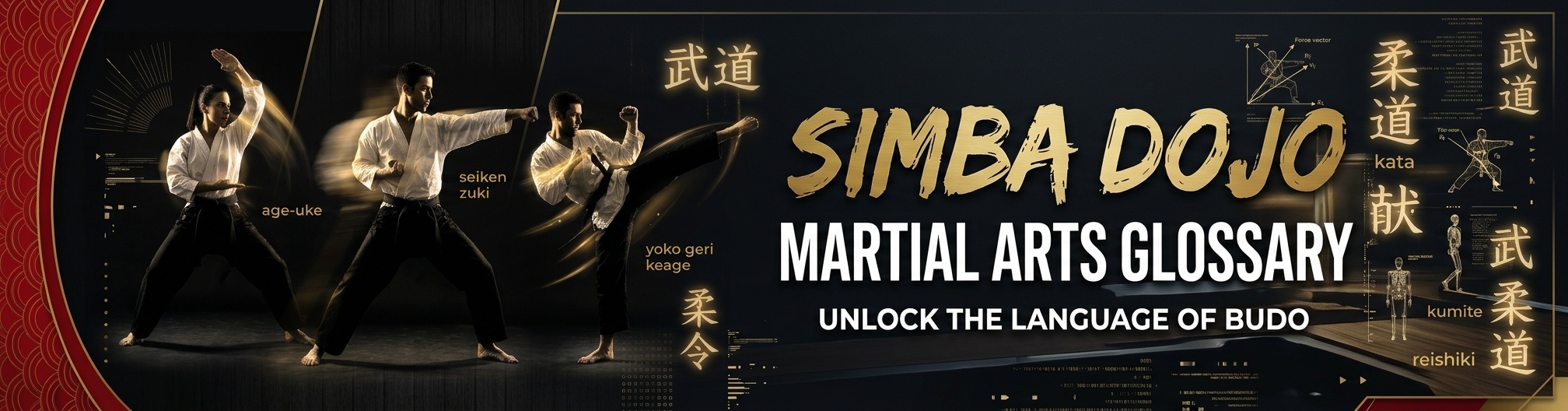
| Shotokan Karate |
Shotokan Karate is one of the most widely practiced traditional styles of Japanese Karate in the world. Founded in Tokyo by Okinawan master Gichin Funakoshi and his son Gigo (Yoshitaka) Funakoshi in the early 20th century, Shotokan is characterized by its powerful, long, linear stances, dynamic hip rotation, explosive focus (Kime), and a structured approach centered on three fundamental pillars: basic techniques (Kihon), formal forms (Kata), and sparring (Kumite).
Etymology & Structural Breakdown
The name Shotokan is composed of three Japanese kanji characters with deep poetic and historical origin:
-
Shō (松): Meaning "pine tree."
-
Tō (濤): Meaning "waves" or "billows." (Together, Shōtō 松濤 was Gichin Funakoshi's pen name when writing poetry, inspired by the sound of wind rustling through pine needles like ocean waves on Mount Torao in Okinawa).
-
Kan (館): Meaning "hall," "house," "building," or "dojo."
-
Karate (空手): Composed of Kara (空 - empty) and Te (手 - hand), meaning "empty hand."
Combined, Shotokan Karate (松濤館空手) literally translates to "The Hall of Shōtō's Empty-Hand Way," originally naming the dojo built for Master Funakoshi in Tokyo in 1939.
Key Characteristics & Components
-
The Three Pillars (San-Kon): Built upon the disciplined integration of Kihon (fundamentals), Kata (pre-arranged forms), and Kumite (sparring).
-
Deep Stances & Low Center of Gravity: Utilizes long, stable stances—such as Zenkutsu-dachi (front stance), Kokutsu-dachi (back stance), and Kiba-dachi (straddle stance)—to build leg strength, stability, and maximum power generation.
-
Explosive Power & Kime: Emphasizes instant contraction of all body muscles at the exact moment of strike or block impact (Kime), followed by immediate relaxation.
-
Hip Rotation (Koshi no Kaiten): Drives offensive and defensive power using sharp hip snap (Gyaku-hanmi or Jun-hanmi) rather than isolated arm or shoulder strength.
Practical and Tactical Application in Shotokan Karate
In practical combat and self-defense scenarios, Shotokan Karate focuses on decisive power, rapid spatial closing, and tactical linearity:
-
Long-Range Striking (Maai): Leverages long, rapid lunges (Oi-zuki, Kizami-zuki) to strike opponents from outside their range before they can react.
-
Ikken Hissatsu (One Strike, Definite Down): Traditional tactical philosophy emphasizing a single, completely focused attack delivered with sufficient speed, power, and biomechanical precision to disable an attacker.
-
Hard Blocking & Deflection: Basic defense utilizes sharp, structural blocks (Age-uke, Soto-uke, Gedan-barai) that double as bone-conditioning counter-strikes to damage an opponent's incoming limb.
Key Variations & Mechanics
-
JKA (Japan Karate Association) Style: Emphasizes classical, rigid basic execution, traditional deep stances, explosive linear power, and strict adherence to historical forms.
-
Gigo Funakoshi Modifications: Introduced dynamic lower stances, high kicks (Mawashi-geri, Uro-mawashi-geri, Yoko-geri), and fluid stepping mechanics that modernized Shotokan beyond its original Okinawan origins.
-
Sport & WKF Adaptation: Features lighter, higher stances, rapid continuous bouncing footwork, and point-scoring blitzing optimized for athletic competition (Shiai-Kumite).
Budo & Cultural Significance
In Budo, Shotokan Karate is explicitly framed not as a violent combat sport, but as a discipline for character development. Master Gichin Funakoshi established the Niju Kun (Twenty Precepts) and the Dojo Kun (Dojo Rules), emphasizing that "Karate begins and ends with respect" (Karate-do wa rei ni hajimari, rei ni owaru). Through relentless physical hardship, technical repetition, and mental discipline, practitioners polish their character (J人格 完成 - J人格 Kansei), cultivating courage, humility, self-control (Setsudō), and peace.
Author - Sensei CC
Hits - 31
Synonyms:
Shotokan, Shotokan-ryu, Japanese empty hand, traditional Shotokan karate, Funakoshi karate style.
|