The Center on Main™ in Verrado®
4239 N Village Street
Buckeye, AZ 85396

Monday and Friday
7:30 pm - 8:30 pm

The Center on Main™ in Verrado®
4239 N Village St
Buckeye, AZ 85396

Monday and Friday
7:30 pm - 8:30 pm

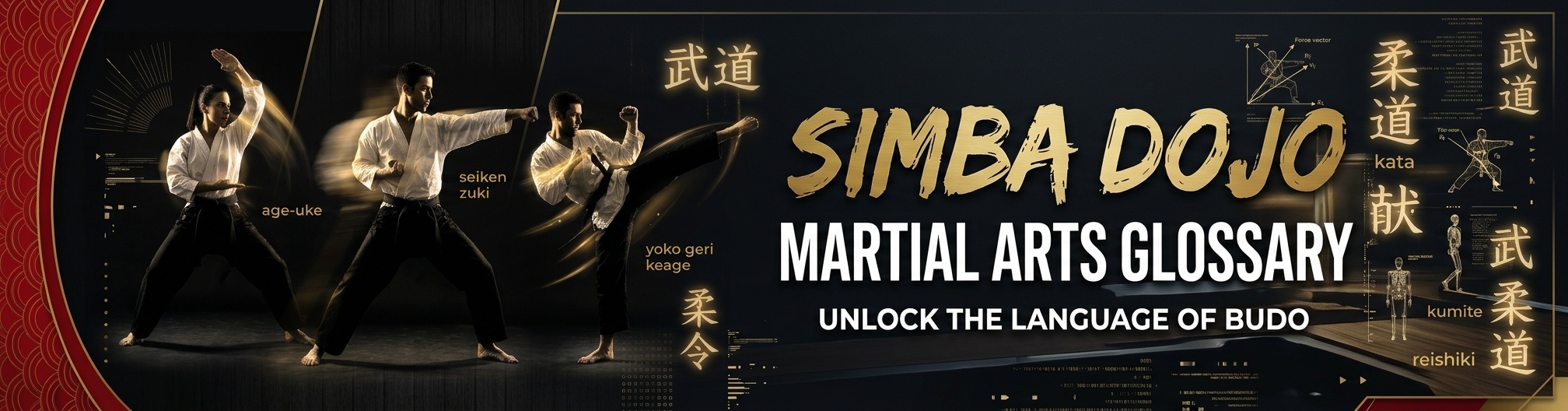
simba dojo glossary banner v2

Ippon-ken

Search for glossary terms (regular expression allowed)

Glossaries

Term Definition
Ippon-ken

Ippon-Ken (一本拳)

Ippon-ken, translated as the One-Knuckle Fist (or One-Point Fist), is a specialized single-point hand weapon in traditional karate. Formed by protruding the primary knuckle joint of either the index finger (hitoe-ken) or middle finger (nakadaka-ken) while tightly closing the rest of the fist, it focuses the full kinetic force of a strike into a highly concentrated point of impact.

    Etymology & Structural Breakdown

    • Ippon (一本): One, single, or one full point.

    • Ken (拳): Fist or weapon of the hand.

    Together, Ippon-ken literally translates to "One-Knuckle Fist."

    Depending on which joint is extended, it generally breaks down into two specific structural variations:

    • Hitoe-yubi Ippon-Ken (食指一本拳): The first knuckle joint of the index finger protrudes outward, backed firmly by the tip of the thumb pressed tightly against the side of the bent finger for structural reinforcement.

    • Nakadaka-Ippon-Ken (中高一本拳): The first knuckle joint of the middle finger extends outward, held in place and braced tightly by the thumb and adjacent fingers.

    Key Characteristics & Components

    • Pressure Concentration: By reducing the impact area down to a single knuckle joint, ippon-ken multiplies the pressure () exerted on a target, allowing strikes to penetrate deeply past outer surface musculature.

    • Thumb Support & Hand Integrity: Structural integrity relies entirely on the thumb lock. The thumb must press securely against the index finger's bent joint to prevent the extended finger from collapsing or breaking upon impact.

    • Target Specificity: Unlike the broad surface of a standard two-knuckle fist (seiken), ippon-ken is designed strictly for soft-tissue targets, nerve centers (kyusho), and vulnerable anatomical gaps (e.g., between ribs or beneath the nose).

    Practical Application in Shotokan Karate

    In Shotokan Karate, ippon-ken is introduced as an advanced open/specialized hand technique across bunkai (application) and kata:

    • Vital Point Striking (Kyusho-jutsu): Used to target vulnerable areas where a standard fist cannot easily penetrate or where precise focal force is needed, such as the philtrum (jinto), solar plexus (suigetsu), throat (matsukaze), lower ribs, or nerve clusters along the arms and throat.

    • Kata Applications:

      • Features prominently in advanced kata such as Hangetsu, where slow, tension-driven movements transition into precise single-point strikes.

      • Appears in kata such as Chinte, where specialized finger and knuckle weapons are employed for close-range defense against larger aggressors.

    • Close-Quarter Striking: Highly effective at short range (chika-ma) when space is limited and full arm extension for a standard lunge punch (oi-zuki) is unavailable.

    Budo & Cultural Significance

    • Precision Over Brute Force: Ippon-ken exemplifies the traditional Budo principle that anatomical knowledge and technical precision outweigh raw physical size or muscle strength.

    • Preservation of Okinawan Heritage: Specialized hand weapons like ippon-ken carry forward the original Okinawan self-defense heritage (Ti / Tode), where martial artists developed lethal strikes tailored for real-life self-defense rather than modern sport rules.

    • Mindful Rigor (Kime): Executing ippon-ken safely demands complete alignment, grip strength, and focused intent (kime). A weak or misaligned knuckle risks injury to the practitioner, reinforcing the discipline required to master specialized Budo weapons.

    Author - Sensei Miller
    Hits - 16
    Synonyms: One-Knuckle Fist, Single-Knuckle Strike, One-Point Fist, Index-Knuckle Fist, Middle-Knuckle Fist
    Ask a question
    1000 characters left