
The Center on Main™ in Verrado®
4239 N Village Street
Buckeye, AZ 85396

Monday and Friday
7:30 pm - 8:30 pm

The Center on Main™ in Verrado®
4239 N Village St
Buckeye, AZ 85396

Monday and Friday
7:30 pm - 8:30 pm

Articles in Category: Concepts

Budo: The Philosophical Heart of Japanese Martial Arts

In a modern world where combat sports are often measured in titles, knockouts, and athletic achievements, Budo (武道) offers a radically different perspective. Beyond physical self-defense or competitive victory, Budo is an inner discipline—a lifelong path that uses the crucible of martial training as a tool for personal refinement and character development.

1. Etymology and Evolution: From Bujutsu to Budo

To understand Budo, one must examine its linguistic roots:

  • Bu (武): Commonly translated as "martial" or "military." Etymologically, the kanji combines two components: "to stop" (止) and "spear/halberd" (戈). Thus, at its deepest level, Bu carries the connotation of stopping conflict or bringing peace, rather than initiating violence.

  • Do (道): Originating from the Chinese concept of Tao, meaning "path," "way," or a spiritual lifestyle.

Historically, Japan's warrior class practiced Bujutsu (武術, martial arts/techniques)—pragmatic combat systems designed for battlefield survival during centuries of civil war. However, during the peaceful Edo period and the subsequent Meiji Restoration, these combat systems evolved. Stripped of their immediate battlefield necessity, methods like Jujutsu, Kenjutsu, and Okinawan Te were transformed into modern Budo disciplines—such as Judo, Kendo, Kyudo, Karatedo, Aikido, and Iaido.

2. Core Pillars of Budo Philosophy

Budo is distinguished from standard athletics by several foundational concepts rooted in Zen Buddhism, Shinto, and Confucianism:

1. Reigi (礼儀) – Etiquette and Respect

Training begins and ends with bowing (Rei). Respect is extended not only to the instructor (Sensei) and training partners, but also to the training space (Dojo) and the equipment. Etiquette is not mere formality; it fosters humility, safety, and a calm mind.

2. Shin-Gi-Tai (心・技・体) – Mind, Technique, Body

True mastery in Budo requires the harmonious unification of three elements:

3. Shin-Ken-Shobu (真剣勝負) – The Spirit of Serious Endeavor

Literally translating to "a match with real swords," this principle encourages practitioners to approach every movement with absolute presence and earnest intensity, treating practice as if their life depended on it.

4. Shoshin (初心) – The Beginner’s Mind

No matter how many years or decades a practitioner trains, maintaining Shoshin—an open, eager mind free from preconceptions or arrogance—is essential for continuous growth.

3. Comparative View: Budo vs. Combat Sports

While modern combat sports share physical roots with martial arts, their underlying philosophies differ significantly in focus and intention:

Aspect Modern Combat Sports (MMA, Boxing, Kickboxing) Traditional Budo (Judo, Aikido, Kendo, Karatedo)
Primary Goal Victory in competition, physical dominance Self-mastery, moral development, peace of mind
Target Audience Opponent to be defeated Training partner helping you refine your art
Focus Physical athleticism, strategy, rulesets Integration of mind, body, etiquette, and spirit
Lifespan of Practice Often ends when physical peak passes Intended to be practiced throughout an entire lifetime

4. Key Disciplines of Modern Budo (Gendai Budo)

Modern Budo encompasses several widely recognized paths, each focusing on different weapons or unarmed concepts:

  • Judo (柔道 - The Gentle Way): Founded by Kano Jigoro, emphasizing balance, leverage, throws, and grappling.

  • Karatedo (空手道 - The Way of the Empty Hand): Focusing on striking, kicking, blocking, and form (Kata).

  • Aikido (合気道 - The Way of Harmonizing Energy): Developed by Ueshiba Morihei, concentrating on redirects, joint locks, and blending with an attacker's force.

  • Kendo (剣道 - The Way of the Sword): Full-contact fencing using bamboo swords (Shinai) and protective armor (Bogu).

  • Kyudo (弓道 - The Way of the Bow): Traditional Japanese archery, practiced as a form of standing meditation and focus.

  • Iaido (居合道 - The Way of Drawing the Sword): The art of smoothly drawing the sword, striking an opponent, clearing blood, and sheathing.

Conclusion: The Way as a Lifelong Journey

Budo teaches that the ultimate opponent is never the person standing across from you on the mat—it is your own ego, fear, impatience, and physical limits. By transforming combat techniques into a tool for self-discovery, Budo provides a timeless framework for navigating the challenges of everyday life with dignity, focus, and resilience.
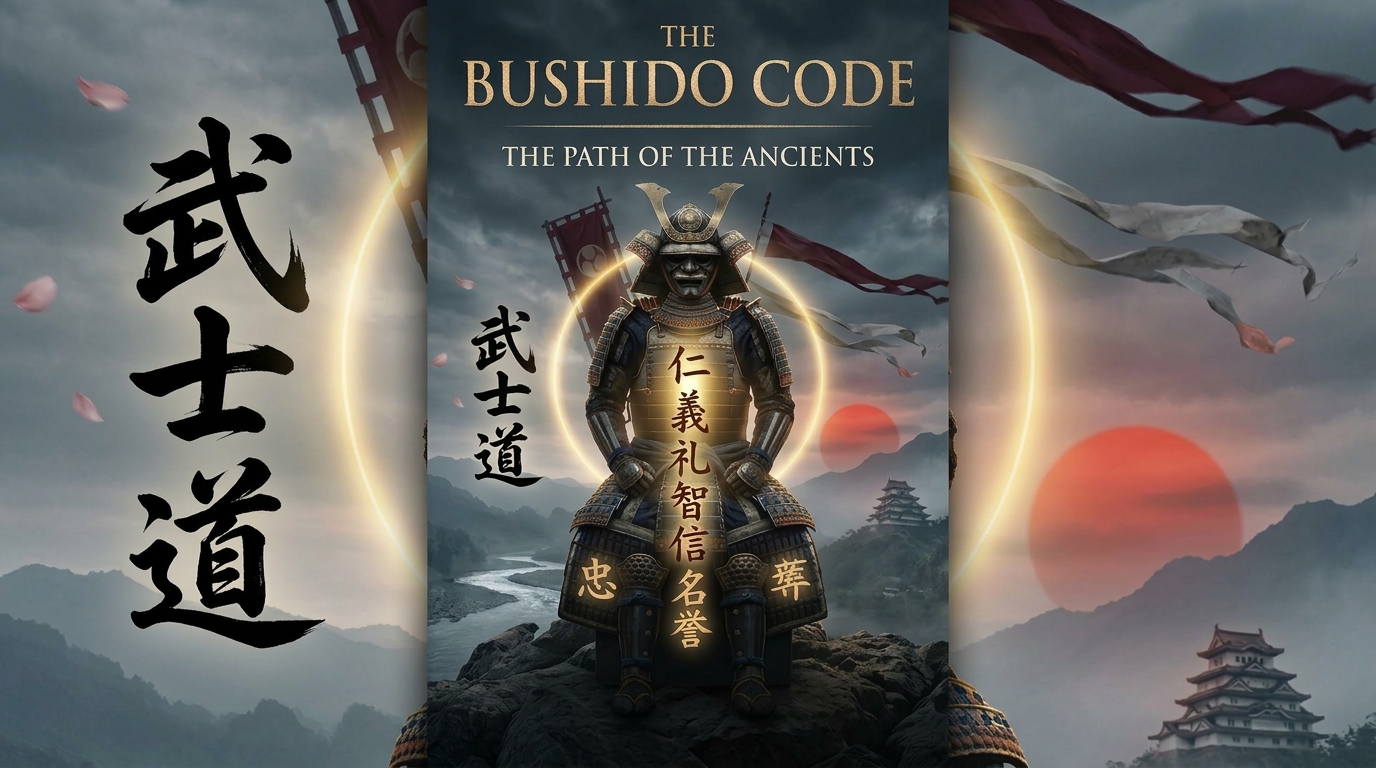

Dō: The Way of Self-Mastery Through Japanese Martial Arts

In Western culture, physical activities are often categorized cleanly into sports, self-defense, or physical fitness. Yet in traditional Japanese martial arts, practice extends far beyond physical utility into something deeper: Dō (道)—the "Way."

Written with the Chinese character for Tao, Dō signifies an ongoing, lifelong journey of self-refinement. When attached as a suffix to traditional martial arts—turning Jujutsu into Judo, Kenjutsu into Kendo, or Karate into Karatedo—it transforms a system of fighting techniques into a profound path for mental, moral, and spiritual growth.

1. Etymology and Philosophical Roots

The kanji for Dō (道) combines two distinct ideological elements:

  • The head (首): Representing thought, spirit, awareness, and direction.

  • Movement / Walking (辶): Representing action, practice, and the physical path forward.

Together, the character implies moving forward with awareness—the active harmony of mind and body progressing along a continuous road.

Historically, Dō emerged as martial techniques shifted away from their immediate battlefield origins during periods of extended peace, evolving into structured disciplines for personal development (Shugyō).

2. From Jutsu (Art/Technique) to Dō (The Way)

Understanding Dō requires examining its historical counterpart: Jutsu (術).

Feature Jutsu (武術 - Combat Art/Technique) Dō (武道 - The Martial Way)
Primary Focus Battlefield survival, technical efficiency Character building, inner discipline
Ultimate Goal Defeating the enemy external to yourself Conquering the internal enemy (ego, fear, pride)
Outcome Metric Victory, damage inflicted, survival Personal growth, emotional poise, harmony
End of Practice When physical capacity wanes Continues throughout an entire lifetime

While Jutsu provides the indispensable physical framework—the precise biomechanics of strikes, locks, and footwork—Dō elevates those techniques into tools for self-discovery. Without sound technical skill (Jutsu), there is no substance; without Dō, physical skill remains merely a tool for harm or sport.

3. Core Pillars of Dō in the Dojo

The concept of the "Way" is not an abstract theory; it is actively cultivated every day on the mat (Tatami) through distinct principles:

1. Shugyō (修行) – Austere Mind-Body Training

Dō demands severe, continuous practice. Through repetitive drill work, physical exhaustion, and rigorous discipline, the practitioner’s superficial ego strips away, revealing resilience, composure, and true strength.

2. Reigi (礼儀) – Etiquette as Spiritual Practice

In a Dō path, training begins and ends with bowing (Rei). Respecting the training space, the instructor, your training partners, and your equipment isn't mere ritualism; it is the physical expression of humility and mindfulness.

3. Shin-Gi-Tai (心・技・体) – Unification of Being

A practitioner of Dō strives for the absolute balance of Shin (mind/spirit), Gi (technical skill), and Tai (physical body). True mastery occurs only when all three operate as one.

4. Shoshin (初心) – The Beginner's Mind

No matter how many years pass or what rank is attained, the path of Dō is endless. Approaching practice with Shoshin—an open, humble mind free of self-importance—ensures continuous learning and personal evolution.

4. Modern Applications: Dō in Everyday Life

The ultimate test of a martial path never happens inside the training hall; it unfolds in daily living. The calm focus cultivated while facing an attack translates directly into patience during life's stresses, integrity in personal relationships, and clarity under pressure.

As Karate pioneer Gichin Funakoshi famously noted:

"The ultimate aim of Karate lies not in victory or defeat, but in the perfection of the character of its participants."

Conclusion: The Road That Never Ends

Dō teaches us that perfection is not a static destination to be reached, but a continuous way of living. By committing to the path—embracing the struggle, honoring the etiquette, and constantly refining both technique and character—the martial artist finds that the journey itself is the reward.

Spirit Over Trophies: Master Gichin Funakoshi’s Stance on Karate Competition and Sport

In an era where martial arts are frequently measured by tournament medals, championship belts, and high-speed point sparring on television, it can be startling to realize that the father of modern Shotokan Karate held a radically different vision. Master Gichin Funakoshi (1868–1957), the Okinawan scholar and educator who introduced Karate to mainland Japan, looked upon modern sports competition with deep skepticism and profound caution.

At Simba Dojo, our training is grounded in the foundational principles passed down by Master Funakoshi. To truly understand why traditional Karate places character above silver cups, we must examine Funakoshi’s philosophy on competition, the era in which he lived, and the higher spiritual purpose he envisioned for Karate-dō.

The Master’s Mission: Modernizing Karate for Physical and Moral Education

When Gichin Funakoshi traveled from Okinawa to Tokyo in 1922 to demonstrate Karate at the Ministry of Education's First National Athletic Exhibition, his primary goal was not to showcase a lethal fighting style or create an athletic spectator sport. Rather, Funakoshi sought to adapt and modernize traditional Okinawan Te into Karate-dō (The Way of the Empty Hand)—a holistic educational discipline suitable for Japanese school systems, universities, and the general public.

Funakoshi envisioned Karate as a lifelong path of physical education (taiiku), mental conditioning, and moral refinement. He aimed to preserve the classical Okinawan ethos while integrating Karate into the broader fabric of Japanese Budo (martial ways), ensuring it would build healthy, disciplined, and virtuous citizens.

Martial Arts Competitions in Funakoshi’s Era

During Funakoshi’s life, Japanese martial arts were undergoing a dramatic transformation. Traditional combat arts (Bujutsu) were being modernized into educational and sporting systems (Budo).

Two major Japanese arts had already embraced structured competitive formats:

  • Judo: Founded by Jigoro Kano (a mentor and close supporter of Funakoshi), Judo modified classical Jujutsu techniques to create a safe, dynamic grappling sport featured in school programs and national tournaments.

  • Kendo: Evolved from classical Kenjutsu, Kendo utilized protective armor (bogu) and bamboo swords (shinai) to facilitate full-contact sparring matches.

Observing how competition influenced Judo and Kendo, university students studying under Funakoshi began pushing to create an organized sparring tournament format for Karate (Shiai Kumite). However, Funakoshi strongly resisted these demands. He recognized that applying a sport mindset to empty-hand striking presented unique moral and technical dangers that did not apply to grappling or armored swordplay.

Philosophical, Cultural, and Spiritual Foundations

Funakoshi’s opposition to sporting competition was rooted in three deeply interconnected pillars:

1. Philosophical Influences: Confucian Ethics and Zen Mindset

As a scholar classically trained in Confucianism, Funakoshi believed that self-cultivation, filial piety, social harmony, and mutual respect were the highest expressions of human virtue. Confucian philosophy emphasizes inward self-reflection rather than outward domination over others. Complemented by Zen philosophy—which teaches non-attachment to ego, winning, or losing—Funakoshi maintained that battling an opponent for a trophy distorts the true martial mindset (mushin).

2. Cultural Influences: Okinawan Kabu and the Japanese Budo Transition

In traditional Okinawan culture, martial arts were practiced in secrecy, focused entirely on practical self-defense, life preservation, and individual character refinement. When Funakoshi transitioned Karate to mainland Japan, he sought to align it with the samurai ethos of Budo, where true mastery is an internal pursuit. In Japanese Budo, competing for public applause or vanity was viewed as shallow and contrary to the dignity of a true practitioner.

3. Spiritual Influences: The Principle of Ikken Hissatsu and Non-Violence

Spiritually, classical Karate techniques were designed around Ikken Hissatsu—the concept of "one blow, decisive kill." Because true traditional striking targets vital anatomical areas (eyes, throat, groin, joints), full-contact competitive striking without protective equipment risked severe injury or death. Conversely, modifying techniques to fit artificial sport rules reduced devastating martial strikes into superficial, light-touch points, diluting the essence of the art.

The Higher Purpose of Karate-dō

Master Funakoshi famously stated:

"The ultimate aim of Karate lies not in victory or defeat, but in the perfection of the character of its participants."

For Funakoshi, the higher purpose of Karate was self-conquest, not opponent-conquest. The true adversary in Karate is not the person standing across from you on the mat; it is your own laziness, fear, arrogance, impatience, and self-doubt. By engaging in rigorous basic drills (Kihon), formal patterns (Kata), and controlled partner work, practitioners forge an unshakeable mind (Fudoshin) capable of navigating life's challenges with grace and humility.

What Values Are Corroded by a Sports-Centric Mindset?

Funakoshi warned that prioritizing competition, medals, and sport success threatens to corrode the core values of Karate-dō:

  • Ego and Arrogance: Tournament success often breeds vanity in winners and bitterness or self-hatred in losers, directly opposing the humility (shoshin) required of a martial artist.

  • Dilution of Technique: Sport rules encourage artificial habits—such as pulling punches early, ignoring vulnerable targets, or sacrificing proper stance stability solely to score a quick point.

  • Erosion of Respect (Rei): When winning becomes the ultimate goal, respect for training partners degenerates into treating opponents as mere obstacles to be defeated.

  • Loss of Lifelong Practice: Sport karate favors youth, speed, and athletic agility, creating an art that practitioners abandon as they age. Traditional Karate-dō, by contrast, is engineered to be practiced safely and meaningfully into one's 80s and 90s.

Is Competition a Direct Violation of Bushido?

Is competition in direct conflict with the samurai code of Bushido? Not inherently, but a purely sporting mindset violates several of its core virtues:

  • Gi (Righteousness / Justice): True Bushido demands acting with moral rectitude, not altering principles for public acclaim.

  • Rei (Polite Courtesy): Competing purely to glorify oneself degrades the respect owed to others.

  • Meiyo (Honor): Honor in Bushido comes from noble conduct and character, not from metal medals or artificial sport titles.

While modern competition can offer value when used strictly as a controlled gauge of timing under stress, Funakoshi believed that treating sport as the primary focus of Karate directly violated the spiritual core of Budo. When winning a trophy replaces the perfection of character, the path ceases to be Karate-dō.

Honoring Tradition While Respecting Every Student's Individual Path

At Simba Dojo, we deeply understand that each person carries different personal values and that every practitioner moves in their own unique direction. We are not inherently against anyone who chooses to pursue a competitive athletic path, nor are we against any student who wishes to test their skills in tournaments. Should a student choose to compete, we fully support them in pursuing their goals.

At the same time, competition is never enforced at Simba Dojo, nor is tournament participation ever required or included in any grading policy for belt advancement. Tournament competition remains strictly an optional avenue within one's personal journey through the martial arts. Above all, we respect the traditional values and foundational mission of Karate-dō, continuously imparting these time-honored principles to every student while encouraging everyone to grow, honoring the fact that we all have different paths to travel.

Stepping onto the Mat: Tournament Competition & The Path of Growth in Traditional Karate

Participating in a karate tournament is far more than a quest for medals—it is a vital pillar of traditional martial arts practice. While daily training (keiko) builds technical proficiency and conditioning inside the dojo, competition presents a unique environment to test character, resilience, focus, and spirit (budo spirit) under elevated pressure.

Whether a practitioner is a young beginner stepping onto the tatami for the first time or an experienced black belt refining technical execution, tournaments offer dedicated divisions to test every aspect of martial artistry.

Key Tournament Events & Disciplines

Karate tournaments are structured into distinct divisions based on age, rank, and discipline. Each event highlights a different dimension of skill, precision, and application.

1. Kata (Formal Forms)

  • What it is: Kata is the foundation of traditional karate—a choreographed sequence of offensive and defensive techniques against imaginary opponents. Competitors perform pre-arranged forms judged on technical accuracy, posture, power, timing, breathing control, and focus (zanshin).

  • What to expect: Competitors present their form individually before a panel of judges, demonstrating maximum precision, balance, and expression of intent.

2. Kumite (Sparring)

  • What it is: Kumite tests controlled application in live combat against an active opponent. Depending on the ruleset and organization, sparring ranges from point-based controlled sparring (sanbon or ippon kumite) to continuous light-contact divisions.

  • What to expect: Competitors wear protective gear (hand guards, mouthguards, shin pads) and aim to deliver precise, controlled strikes to designated target areas with proper distance (ma-ai), speed, and immediate retreat/awareness.

3. Kobudo (Okinawan Weapons)

  • What it is: Featured in traditional and multi-style events, Kobudo divisions involve the performance of formal weapon patterns using classical Okinawan tools such as the Bo (staff), Sai (trident-shaped iron batons), Tonfa, or Nunchaku.

  • What to expect: Judges evaluate body mechanics, flow, weapon control, and execution as an extension of the practitioner’s body.

4. Team Kata & Synchronized Divisions

  • What it is: A discipline where teams of three practitioners execute a kata simultaneously in perfect unison. In higher-level competitions, team kata is followed by a Bunkai (practical application analysis), where the team demonstrates live applications of the form’s techniques.

  • What to expect: Exceptional harmony, rhythm, and teamwork required to synchronize every breath, stance, and strike down to the fraction of a second.

The Benefits of Tournament Participation

1. Accelerated Personal & Technical Growth

  • Refining Precision Under Scrutiny: Preparing for a competition raises standard expectations. Knowing a panel of senior judges will evaluate every detail sharpens technique, stance depth, and alignment far faster than routine class practice.

  • Overcoming High-Pressure Stress: Competing places martial artists in an unfamiliar environment with onlookers, judges, and strong opponents. Learning to manage nerves and channel adrenaline builds calm focus (fudoshin or "unshakable mind") that translates directly into everyday stress management.

2. Character Development & Etiquette

  • True Respect (Reigi): Tournament participation reinforces the core dojo etiquette of starting and finishing with respect. Competitors learn to bow sincerely to their opponents, judges, and referees—win or lose.

  • Humility and Grace in Victory & Defeat: Victory teaches humility; defeat teaches invaluable lessons. Analyzing a loss or identifying technical flaws inspires humility, self-reflection, and renewed dedication to training.

3. Building Camaraderie & Community Spirit

  • Dojo Unity: Representing your dojo alongside training partners fosters strong bonds of encouragement, mutual support, and team spirit.

  • Expanding Horizons: Tournaments gather practitioners across different clubs, regions, and backgrounds. Exchanging experiences and watching other skill levels expands a practitioner's perspective of the martial arts world.

4. Tangible Milestones & Goal Setting

  • Competition provides concrete targets for training cycles. Working toward a specific tournament date instills goal-setting habits, physical conditioning discipline, and consistency.

Final Thoughts for Competitors

Competing is not about conquering an opponent; it is about mastering oneself. As master Gichin Funakoshi famously stated, "The ultimate aim of karate lies not in victory or defeat, but in the perfection of the character of its participants." Stepping onto the tournament mat is a celebration of effort, dedication, and personal courage.

The Bushido Code

bushido code samurai philosophy

The Bushido code—literally translated as "the way of the warrior"—is one of history's most enduring ethical frameworks. Developed over centuries in feudal Japan, this unwritten moral code governed the conduct, values, and lifestyle of the samurai class. Although the samurai era officially ended during the Meiji Restoration in the late 19th century, the core principles of Bushido continue to exert a profound influence on modern Japanese culture, business ethics, and global martial arts philosophy.

Historical Origins
Bushido evolved alongside the rise of Japan’s samurai class between the 10th and 14th centuries. Influenced heavily by three foundational philosophies, the code blended spiritual discipline with practical military tradition:

Shintoism: Embedded deep respect for nature, ancestors, and loyalty to the Emperor and land.

Buddhism (especially Zen): Taught detachment from material desires, fearlessness in the face of death, and mental clarity under pressure.

Confucianism: Formed the basis for social order, duty, respect for authority, and moral righteousness within relationships.

During the peaceful Edo period (1603–1867), under the Tokugawa Shogunate, samurai transitioned from frontline warriors to administrators and scholar-bureaucrats. It was during this era that Bushido was formalised and codified in literature, most famously by Inazo Nitobe in his 1899 book, Bushido: The Soul of Japan.

The Seven Virtues of Bushido
Nitobe identified seven primary virtues that defined the samurai ethos:

Gi (Integrity / Righteousness): Doing the right thing simply because it is right. A samurai makes decisions based on justice and moral clarity without hesitation.

Yū (Courage): Heroic bravery in action. Courage in Bushido is not blind recklessness, but the mastery of fear to execute right action.

Jin (Benevolence / Compassion): Through intense training, samurai possessed immense power, which carried a duty to protect the weak and show mercy.

Rei (Respect / Politeness): Courtesy and respect extended to allies, superiors, and even enemies. Politeness was seen as a reflection of inner strength rather than mere social protocol.

Makoto (Honesty / Sincerity): Truthfulness in word and deed. For a samurai, speaking an intention was equivalent to performing it; promises required no formal contract.

Meiyo (Honor): A samurai’s personal dignity and reputation were paramount. Actions that brought shame reflected negatively not just on the individual, but on their ancestors and lineage.

Chūgi (Loyalty): Absolute devotion to one's master, lord, and community. Unwavering loyalty was considered the highest virtue in samurai society.

Bushido in the Modern Era
While the samurai no longer walk the streets, the philosophical DNA of Bushido remains deeply embedded in modern society:

Corporate Culture: Principles like loyalty (Chūgi), integrity (Gi), and respect (Rei) shape workplace dynamics, teamwork, and business etiquette in Japan.

Martial Arts: Traditional disciplines such as Kendo, Judo, Aikido, and Karatedo place heavily emphasis on character development, respect, and self-restraint over mere physical combat.

Personal Development: Worldwide, individuals adopt Bushido's focus on self-mastery, discipline, and ethical living as a guide for personal growth and leadership.

The Bushido code serves as a timeless reminder that true strength lies not in the capacity to overpower others, but in the discipline to master oneself and live with unwavering purpose and integrity.

The Karate Tournament Dilemma: Athletic Competition vs. Gichin Funakoshi’s Budo Philosophy

The evolution of Karate from a covert Okinawan self-defense art into a modern global sport represents one of the most significant shifts in martial arts history. At the epicenter of this transformation sits a fundamental question that continues to divide dojos worldwide: Should Karate be practiced as a competitive sport, or does tournament competition undermine its core spiritual and philosophical foundation?

Master Gichin Funakoshi (1868–1957), the "Father of Modern Karate" and founder of Shotokan, held a firm stance on this matter. He famously stated that there are no contests in Karate ("Karate ni shiai nashi"). Yet today, thousands of practitioners participate in local, national, and international tournaments, including the Olympic Games.

To understand this debate, we must examine the tangible benefits and drawbacks of tournament participation alongside the philosophical objections raised by Funakoshi himself.

The Pros of Participating in Karate Tournaments

While traditionalists often view competition with skepticism, modern tournament participation offers several distinct advantages for practitioners:

  • Testing Stress Inoculation and Pressure Management: Controlled sparring in the dojo can rarely replicate the adrenaline surge, physical tension, and emotional pressure of facing an unknown opponent in front of judges and spectators. Tournaments force practitioners to maintain composure (Fudōshin) and focus under acute stress.

  • Sharpening Distance, Timing, and Reflexes: Modern sport karate (Shiai) demands exceptional spatial awareness (Maai), rapid reaction time, and explosive entry timing (De-ai). The fast-paced environment of point sparring hones speed and precision to a high degree.

  • Objective Technical Assessment: Competing in formal pattern divisions (Kata) forces practitioners to refine their posture, stance mechanics (Dachi), balance, and power delivery (Kime). Constructive feedback and scoring from external judges highlight technical flaws that may be overlooked in routine training.

  • Community, Camaraderie, and Global Reach: Tournaments bring together practitioners from diverse schools, styles, and cultures. This fosters mutual respect (Jita Kyōei), exposes students to varied martial interpretations, and builds a sense of belonging within a broader martial arts community.

  • Youth Engagement and Goal Setting: For younger practitioners, tournament medals and trophies provide clear, tangible milestones that encourage discipline, hard work, continuous physical fitness, and healthy sportsmanship.

The Cons of Participating in Karate Tournaments

Despite the physical and athletic benefits, point competition introduces mechanical and psychological drawbacks that can dilute authentic martial efficacy:

  • Development of Bad Tactical Habits: Sport rules heavily reward light, long-range touch scoring rather than heavy, decisive impact (Ikken Hissatsu). Practitioners often drop their non-striking hands, expose vulnerable areas after scoring a point, or abandon root and balance in favor of fast, superficial tag strikes.

  • Neglect of Close-Quarters Self-Defense (Bunkai): Tournament formats strictly forbid joint locks (Kansetsu-waza), throat strikes, vital point striking (Kyūsho-jutsu), low-line kicks, and close-range grappling (Torite). Over-focusing on sport rules can cause practitioners to lose touch with the practical self-defense origins of traditional Karate.

  • Inflation of Ego and Pride: Winning medals can easily breed vanity, arrogance, and a desire to conquer others—attitudes that directly contradict the primary moral objective of Budo, which is self-victory (Masakatsu Agatsu).

  • Arbitrary Officiating and Subjectivity: Judging in both Kata and Kumite can be subjective or inconsistent. Over-reliance on external validation (judges' flags) can lead to frustration, resentment, and a loss of focus on intrinsic self-improvement.

Gichin Funakoshi’s Philosophical Objection: "Karate Ni Shiai Nashi"

Master Gichin Funakoshi’s opposition to competition was not rooted in a distaste for athleticism, but in a deep-seated commitment to preserving the ethical and spiritual heart of Japanese Budo.

1. The Meaning of "Empty Hand" and Non-Aggression

Funakoshi changed the translation of Karate from "Chinese Hand" (唐手) to "Empty Hand" (空手), emphasizing not only a weaponless fist but a mind emptied of ego, hostility, and desire for glory. In his famous 20 Precepts (Nijū Kun), he declared:

"Karate ni sente nashi" — There is no first strike in Karate.

Funakoshi argued that the moment Karate is structured around competition, the mental framework shifts from defensive humility to aggressive conquest. When the goal becomes defeating an opponent for a trophy, the true spirit of Budo is compromised.

2. The Preservation of Lethal Efficacy vs. Sport Standardization

In traditional Okinawan Karate, techniques were designed for survival against real-world violence. True combative effectiveness relies on targeting vulnerable anatomical structures that cannot be safely tested in a sport setting. Funakoshi recognized that to make Karate safe for point-scoring competition, its most dangerous and effective self-defense mechanics would have to be banned or modified, reducing a lethal art to a rule-bound game.

3. The Shift from Budo (The Way) to Sport

Funakoshi viewed Karate as a lifelong path of self-cultivation (Shugyō). In his autobiography, Karate-Do: My Way of Life, he expressed concern that turning Karate into a sport would lead practitioners to focus on short-term athletic peak performance rather than long-term character development. In a sport, aging athletes eventually retire; in Budo, study continues until one's final breath.

┌────────────────────────────────────────────────────────────────────────┐
│                          TRADITIONAL BUDO                              │
│  • Goal: Character refinement, ethical living, self-mastery            │
│  • Focus: Internal victory over ego (Masakatsu Agatsu)                  │
│  • Scope: Lifelong study (Shugyō) without age limits                   │
└────────────────────────────────────────────────────────────────────────┘
                                   vs.
┌────────────────────────────────────────────────────────────────────────┐
│                          MODERN SPORT KARATE                           │
│  • Goal: Medals, trophies, athletic ranking, point scoring              │
│  • Focus: External victory over an opponent                             │
│  • Scope: Athletic peak performance bounded by youth and sport rules   │
└────────────────────────────────────────────────────────────────────────┘

The Historical Compromise: How Modern Karate Bridges the Gap

Following Master Funakoshi's passing in 1957, senior instructors of the Japan Karate Association (JKA)—led by figures like Masatoshi Nakayama—introduced structured match rules (Shiai) to adapt Karate for universities and international federations. They argued that controlled competition, if approached with proper etiquette (Reirō) and emotional detachment, could serve as a powerful training tool rather than an end in itself.

Today, many traditional dojos adopt a balanced perspective:

  • Tournaments as a Mirror, Not the Destination: Competition is treated as a temporary laboratory to test courage, distance, and focus under pressure.

  • Maintaining Dual Practice: Differentiating clearly between sport rules used in competition and the uncompromising, lethal mechanics taught for practical self-defense (Bunkai / Goshin-jutsu).

  • Upholding Dojo Etiquette: Insisting that win or lose, practitioners demonstrate absolute respect (Rei) for opponents, referees, and the art, ensuring that ego never overrides character.

Conclusion

The debate surrounding Karate tournaments highlights the living tension between preserving historical tradition and adapting to modern society.

Gichin Funakoshi’s warning remains a crucial check-and-balance for every martial artist: If competition feeds the ego, degrades technical integrity, or turns a martial way into mere entertainment, it strays from the spirit of Karate-Do. However, when approached with humility, strict self-control, and respect, participating in tournaments can serve as a challenging proving ground—a temporary stop on the infinite path toward self-mastery.

The Psychology of Karate

psychology of karate benifitsOriginating in Japan, karate is recognized as a Budo (martial art), a category that also includes disciplines such as Kyudo (archery), Kendo (swordsmanship), and Judo (grappling). The word "Karate-Do" is derived from three distinct Japanese characters: Kara ("empty"), Te ("hand"), and Do ("way"). Together, Karate-Do translates to "the way of the empty hand," representing a system of weaponless self-defense and personal growth.
The roots of karate trace back to Okinawa—the largest island in the former Ryukyu Kingdom, south of mainland Japan. In the 1500s, Chinese traders introduced Chinese boxing (Kung Fu) to the island. Okinawans integrated these techniques with their indigenous fighting styles, forming an art initially known as To-Te. Prior to 1789, this system was taught in strict secrecy, primarily reserved for high-ranking families.

In 1879, Okinawa officially became part of Japan, allowing the art to be shared more openly. Around this time, the suffix -Do was emphasized, shifting the focus from mere fighting to physical mastery paired with character development. By 1900, karate was incorporated into the Okinawan school system as part of physical education. In the 1920s, Okinawan educators brought the discipline to mainland Japan, introducing it to several major universities. Following World War II, American servicemen stationed in Japan began practicing karate and brought the tradition back to the United States. Today, karate is practiced by millions worldwide (Terry, 2006).

Introduction

Over the past few decades, participation in martial arts as a leisure activity has grown steadily among Americans. Once viewed strictly through the lens of traditional combat, martial arts have evolved into a widely accepted form of exercise suitable for all age groups, with significant potential benefits when integrated into primary and secondary school curricula (Wang et al., 2017).

A core practical benefit of martial arts remains self-defense, fostering a sense of personal security and a commitment to protecting one's family and community. Beyond self-defense, martial arts offer profound health and fitness benefits. The rigorous cardiovascular demands enhance blood circulation and support immune function, leading to increased daily energy and overall vitality.

For adolescents struggling with impulse control or behavioral issues, karate provides an effective therapeutic outlet. The practice develops self-monitoring and self-regulation skills centered around three primary pillars:

  • Self-Control
  • Body Control
  • Discipline

By teaching mind-body integration, karate equips practitioners to face everyday life challenges with resilience (Lakes & Hoyt, 2004). Research indicates that martial arts often foster higher intrinsic motivation compared to standard sports. While competitive athletics sometimes prioritize winning or external fame over holistic development, traditional martial arts emphasize comprehensive physical and psychological growth (Cynarski et al., 2009).

Health Benefits and Behavioral Interventions

Regular physical activity is vital for mitigating chronic health conditions, and organized martial arts offer a well-established framework for sustained fitness. Studies consistently demonstrate positive mental health and psychological outcomes across diverse age groups, though age-related changes in mobility and energy must be factored into training (Origua Rios et al., 2017).

School-based interventions using martial arts like Taekwondo have shown notable cognitive and emotional benefits. Students engaging in traditional martial arts training demonstrate superior affective self-regulation, improved classroom conduct, enhanced teamwork, and better performance on psychological tests compared to non-practicing peers (Lakes & Hoyt, 2004). Notably, research reveals that male participants often show significant gains in classroom behavior and cognitive self-control through these programs. Improved self-regulation builds emotional resilience, reducing the risk of academic and personal burnout.

Emerging Trends in Treating Adolescent Violence

Reaching at-risk youth through traditional talk therapy alone presents unique challenges. Adolescence is a critical developmental transition characterized by identity formation, heightened emotional sensitivity, and an increased susceptibility to risky behaviors such as substance abuse.

Structured physical interventions offer a promising alternative. Integrating traditional martial arts into educational programs helps adolescents develop healthy coping mechanisms, build self-esteem, and process emotions constructively. By replacing destructive outlets with purposeful discipline, structured training supports positive psychological development during these formative years.

Conclusion

Conventional violence-prevention strategies in early education often yield limited long-term success due to a lack of student engagement. In response, traditional martial arts programs have been piloted in elementary and middle schools as a targeted intervention for youth at risk of violence and delinquency.

Findings suggest that traditional martial arts training significantly aids in reducing juvenile offenses. Sustained practice acts as a protective buffer against depression and promotes overall well-being. By fostering discipline, self-regulation, and emotional stability, traditional karate serves as a powerful, holistic tool for positive behavioral modification and personal development.

References

 Cynarski, Wojciech J., Lothar Sieber, Kazimierz Obodyński, Milan Ďuriček, Paweł Król, and Marian Rzepko. 2009. “Section III-Physical Activity & Social Issues Factors of Development of Far Eastern Martial Arts in Central.” Europe Journal of Human Kinetics 22:69–76. doi: 10.2478/v10078-009-0025-2.

 Lakes, Kimberley D., and William T. Hoyt. 2004. "Promoting Self-Regulation through School-Based Martial Arts Training." Journal of Applied Developmental Psychology 25(3):283–302. doi: 10.1016/J.APPDEV.2004.04.002.

 Origua Rios, Sandra, Jennifer Marks, Isaac Estevan, and Lisa M. Barnett. 2017. "Health Benefits of Hard Martial Arts in Adults: A Systematic Review." Https://Doi.Org/10.1080/02640414.2017.1406297 36(14):1614–22. doi: 10.1080/02640414.2017.1406297.

 Terry, Charles M. 2006. "The Martial Arts." Physical Medicine and Rehabilitation Clinics 17(3):645–76. doi: 10.1016/J.PMR.2006.05.001.

 Twemlow, stuart W., and Frank C. Sacco. 1998. "The Application of Traditional Martial Arts Practice and Theory to the Treatment of Violent Adolescents." Adolescence 33(131).

 Wang, Caixia, Jun Liu, Caixia Wang, and Jun Liu. 2017. "A Study on the Teaching Content of Martial Arts in Primary and Secondary Schools from the Perspective of Cultural Inheritance." Advances in Physical Education 8(1):1–6. doi: 10.4236/APE.2018.81001.

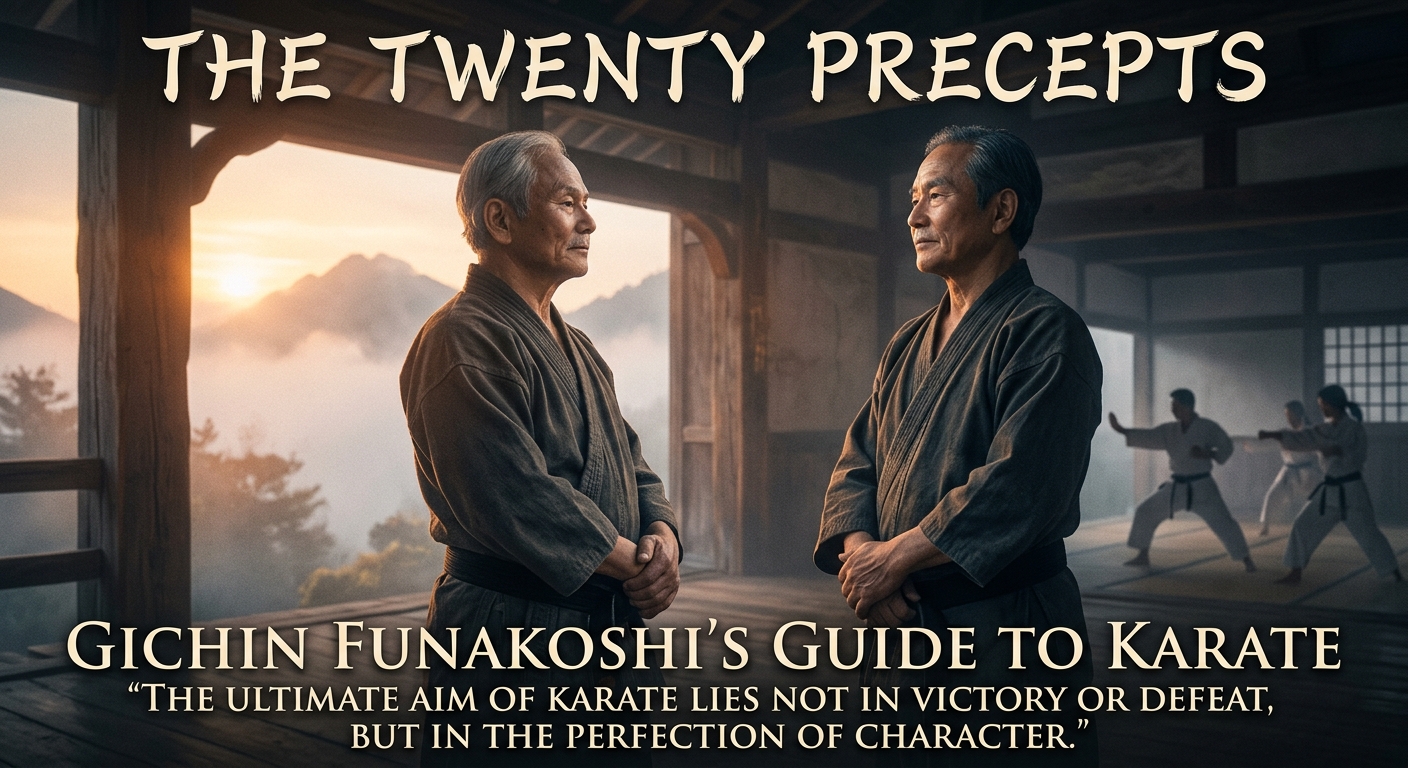
The Twenty Precepts of Karate: Gichin Funakoshi’s Philosophical Blueprint

twenty percepts of karate by Gichin Funikoshi

When Gichin Funakoshi (1868–1957) brought Karate from the island of Okinawa to mainland Japan in the early 1920s, he was not merely introducing a system of kicks, blocks, and strikes. He was offering a way of life—a Do (path) rooted in character, restraint, and mental discipline.

To ensure that the physical power taught in the dojo was guided by a strong moral framework, Funakoshi compiled the Nijū Kun (Twenty Precepts). These principles form the philosophical backbone of modern Shotokan Karate and serve as practical maxims for daily living.

The Philosophy Behind the Precepts

Funakoshi believed that a martial art stripped of morality becomes nothing more than violence. Drawing heavily from Zen Buddhism, Confucianism, and Bushido (the code of the samurai), he viewed the dojo as a training ground for the soul. The ultimate goal of Karate, as Funakoshi famously noted, was not victory or defeat, but the perfection of the character of its participants.

The Twenty Precepts (Nijū Kun)

While traditionally taught and memorized in Japanese, the precepts distill into clear, universal concepts:

  1. Karate-do begins and ends with respect (Rei).

    Etiquette and courtesy are not superficial formalities; they are expressions of humility and consideration for others.

  2. There is no first strike in Karate (Karate ni sente nashi).

    Karate is strictly defensive. A true martial artist never initiates violence or seeks conflict.

  3. Karate stands on the side of justice.

    Martial skill must only be used to defend the innocent, uphold morality, and oppose wrongfulness.

  4. First know yourself, then know others.

    Self-awareness and honest self-reflection must precede any attempt to evaluate or control an opponent.

  5. Mentality over technique (Shin-gi-tai).

    Mindset and spirit are far more critical than physical mastery. Technique without proper intent is hollow.

  6. The mind must be set free.

    Avoid rigidity. Keep the mind open, adaptable, and unattached so it can respond freely to any situation.

  7. Calamity springs from carelessness.

    Negligence, overconfidence, and loss of awareness invite injury and failure both in and out of combat.

  8. Do not think Karate training is only in the dojo.

    The principles learned during physical practice must be integrated into work, family, and daily interactions.

  9. Karate is a lifelong pursuit.

    There is no final destination in martial practice; learning is continuous and infinite.

  10. Apply Karate to all things; therein lies its beauty.

    When the discipline, focus, and harmony of Karate permeate everyday life, one discovers its subtle depth (Myo).

  11. Karate is like boiling water.

    If continuous heat is not applied, it cools. Consistent practice is required to maintain progress.

  12. Do not think of winning; think rather of not losing.

    Fixating on victory creates ego and recklessness. Focus instead on patience, composure, and avoiding critical mistakes.

  13. Make adjustments according to your opponent.

    Adaptability is essential. Victory comes from recognizing vulnerabilities and shifting strategy dynamically.

  14. The outcome of a battle depends on how one handles emptiness and fullness.

    Manage strengths (fullness) and weaknesses (emptiness)—both your own and your opponent's—tactically.

  15. Think of hands and feet as swords.

    Treat your body with seriousness and precision, knowing the gravity of the power you cultivate.

  16. When you step beyond your gate, you face a million enemies.

    Remain alert when entering the world. It is often an individual's own reckless behavior or lack of awareness that invites trouble.

  17. Stances are for beginners; advanced practitioners use natural positions.

    Formal stances build foundational strength and mechanics. Over time, techniques become natural and fluid.

  18. Perform kata correctly; actual combat is another matter.

    Kata (pre-arranged forms) preserves technique and ideal form, but real conflict is unpredictable and requires spontaneous adaptation.

  19. Do not forget the control of power, elasticity, and speed.

    Master physical dynamics: knowing when to use hard or soft power, when to expand or contract the body, and when to act quickly or slowly.

  20. Be constantly mindful, diligent, and resourceful.

    Continuously apply these precepts in your life, seeking new ways to cultivate personal growth every day.

Key Themes of the Nijū Kun

Theme Primary Focus Precepts
Etiquette & Ethics Respect, non-aggression, and justice 1, 2, 3
Mindset & Awareness Self-control, alertness, and lifelong study 4, 5, 6, 7, 8, 9, 10, 16, 20
Combat Strategy Adaptability, restraint, and environmental awareness 11, 12, 13, 14, 15
Physical Application Progression from formal technique to natural movement 17, 18, 19

Relevance in the Modern World

While written in early 20th-century Japan, Funakoshi's precepts transcend physical self-defense. Principles like Karate ni sente nashi (there is no first strike) apply directly to conflict de-escalation. Precepts on adaptability, continuous effort (like boiling water), and self-awareness offer timeless guidance for personal development, leadership, and emotional intelligence.

Gichin Funakoshi designed Karate not as a tool for violence, but as a framework for building character. By living these twenty precepts, a practitioner transitions from merely learning how to fight to mastering the art of living.

For a detailed breakdown of these guiding principles, Gichin Funakoshi's Twenty Guiding Principles of Karate offers a clear overview of the philosophy and its core precepts.

Ask a question
1000 characters left